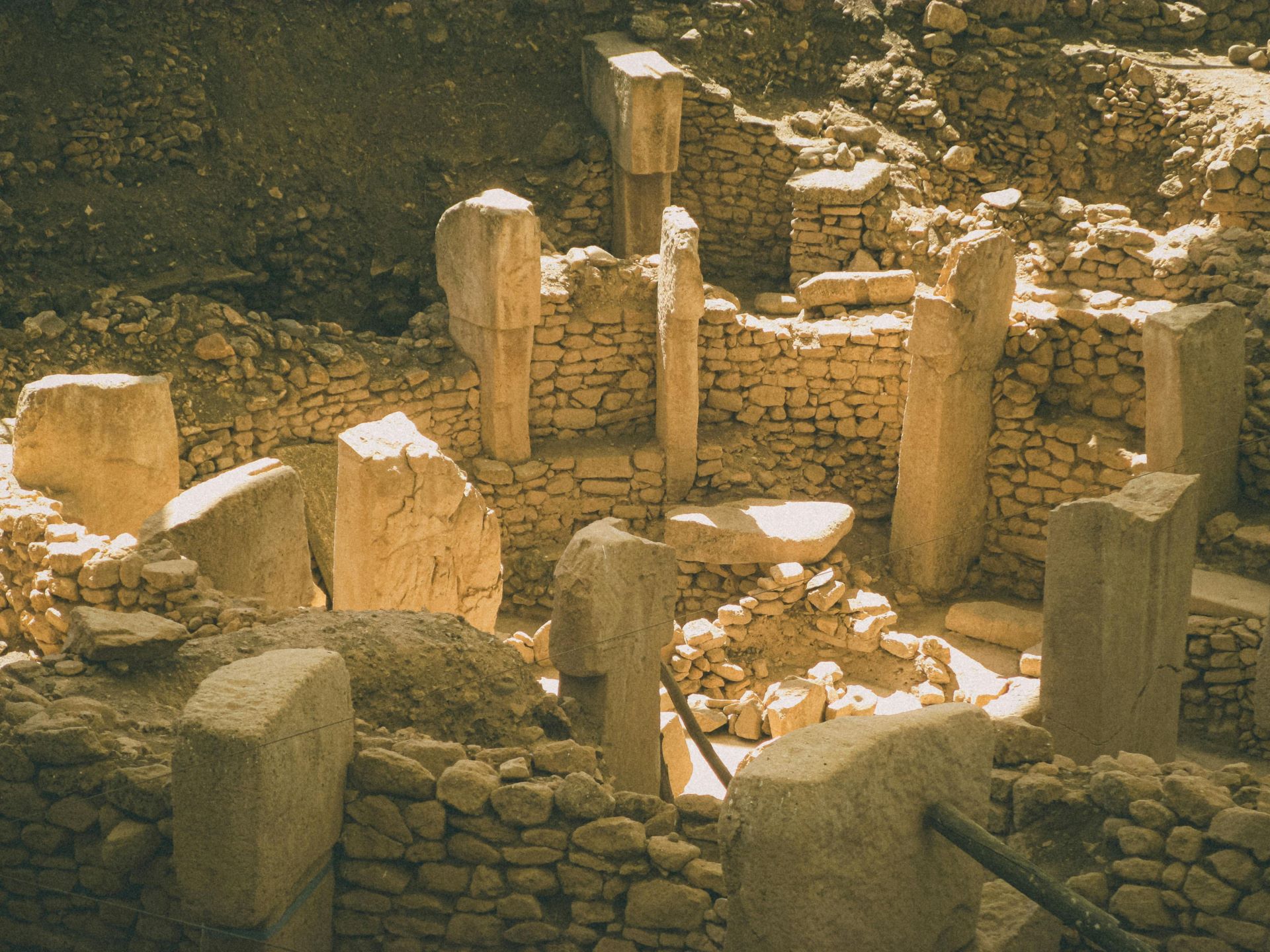
The circular formations at Göbekli Tepe are highly significant for several reasons:
1-Ritual and Ceremonial Use: The circular structures, often referred to as enclosures, are believed to have been used for ritualistic and ceremonial purposes.
2-Architectural Innovation: These formations represent some of the earliest examples of monumental architecture.
3-Symbolic Meaning: The circular design may have had symbolic significance, possibly representing the cosmos or a spiritual realm.
4-Cultural Implications: The existence of these circular formations challenges previous assumptions about the development of human societies.
Photo by Prof. Phillip C. Lucas, Stetson University, 2000-2021
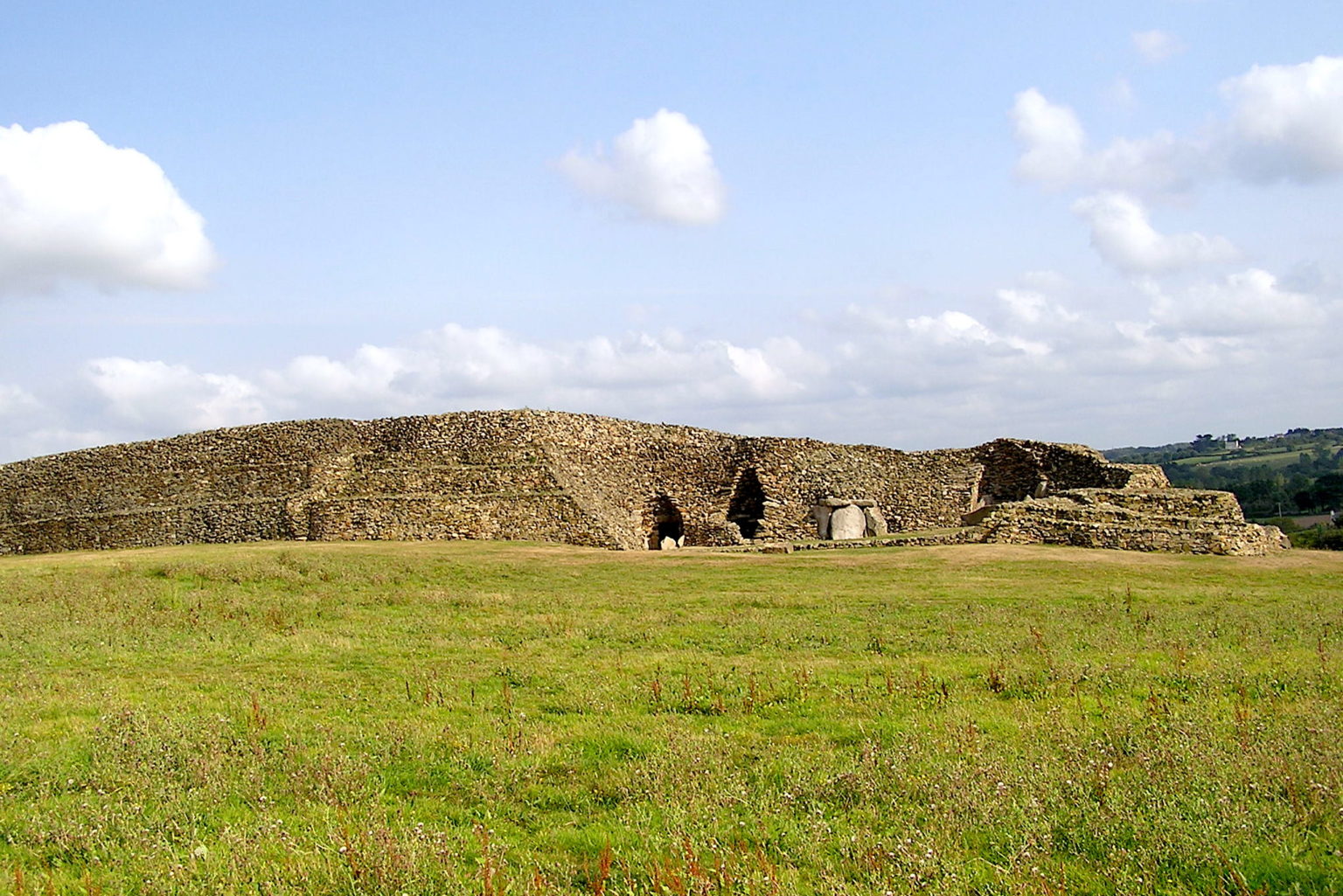
Cairn de Barnenez, France
Located on the Kernéléhen peninsula near Plouezoc’h in Brittany, France, is one of the oldest and most significant megalithic monuments in Europe.
The cairn is approximately 72 meters long, up to 25 meters wide, and over 8 meters high.
The Cairn de Barnenez is notable not only for its age but also for the presence of megalithic art within its chambers.
These artworks are significant as they provide insights into the symbolic and ritualistic practices of the Neolithic people who constructed the monument.
The art within the Cairn de Barnenez is not only a testament to the artistic skills of its builders but also provides a glimpse into their cultural and religious beliefs. The presence of these carvings suggests that the burial chambers were not merely functional spaces but also held significant ceremonial importance.
Monte D'accoddi, Italy
In northern Sardinia is a rare Neolithic structure resembling a Mesopotamian ziggurat. Built around 4000 BCE, it features a stepped stone platform with a long ramp, likely used for ritual purposes.
Its geometric design and cardinal alignment suggest advanced spatial awareness and symbolic intent. The absence of internal chambers points to open-air ceremonies.
The site evolved over time, expanding into a larger pyramid-like form. This transformation marks an early shift toward monumental sacred architecture in Europe.


 © 2026 AvenueBits – All rights reserved.